

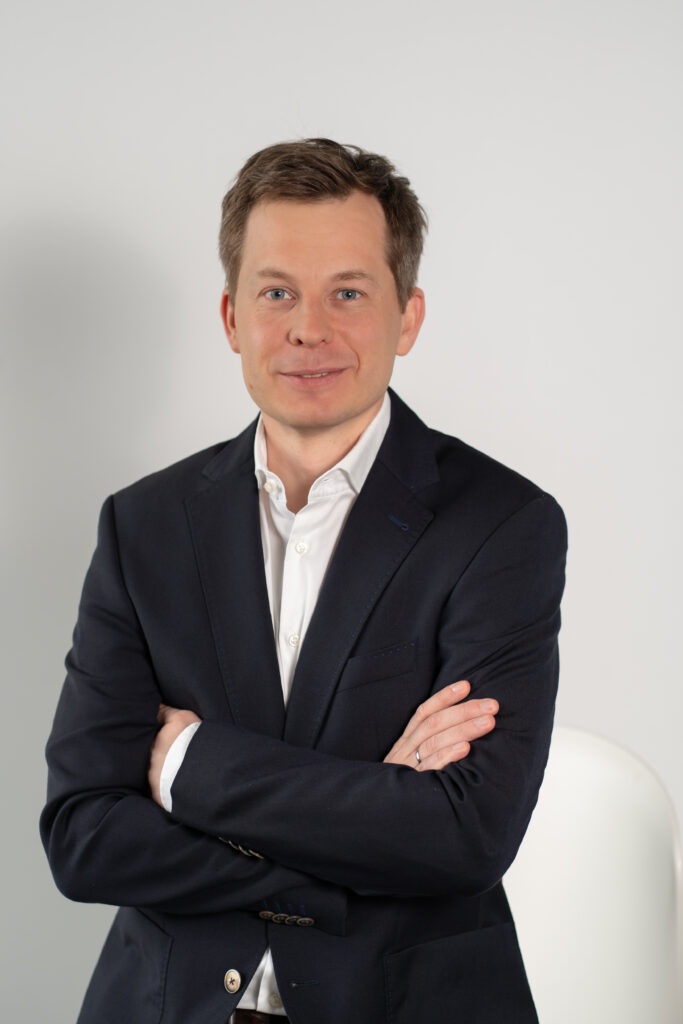
A conversation with Michael Hartleben, General Counsel and ESG Lead
Building ESG for the Future

In this interview, Michael Hartleben, General Counsel and ESG Lead at Trench Group, shares how the company has built a purpose-driven ESG strategy following the carve-out – one that embeds sustainability, safety, and integrity into every aspect of the business. The conversation highlights how ESG is both a strategic enabler and a foundation for long-term value creation.
What opportunities did the carve-out create for shaping Trench Group’s ESG strategy?
When we became a standalone company, we inherited a strong ESG foundation from our former corporate owner. Many of our functions already had mature initiatives and deep expertise in areas such as health and safety, product innovation, and compliance.
The carve-out gave us a unique moment to pause and ask ourselves: what does sustainability mean for us as an independent company? It was an opportunity to design an ESG strategy truly fit for purpose, one that captures the essence of who we are as a standalone business. We conducted a comprehensive Double Materiality Assessment and defined a forward-looking ESG strategy with clear short-, medium-, and long-term goals. The result is a focused, agile framework that builds on our strengths while positioning us for sustainable growth.
How is ESG integrated into our business strategy today?
For us, ESG is not an add-on. It is part of how we run the business every day.
As a global manufacturing company with around 2,800 employees producing highly technical products, our ESG priorities naturally reflect the realities of our operations. Keeping our people safe is and will always remain our number one priority. At the same time, we take pride in the fact that > 50% of our order intake in FY 2025 came from our sustainable offering REGENERAR, which directly contributes to a lower environmental footprint for our customers. And, of course, governance is our license to operate – integrity underpins everything we do.
ESG is therefore fully embedded into our business strategy, supporting both performance and purpose.
ESG leadership comes from the top, with responsibilities integrated across all functions, from R&D to procurement and operations.
What are the main pillars of our ESG strategy going forward?
Our ESG framework is built around five strategic priorities that align closely with our business objectives and stakeholder expectations.
We are strengthening and expanding our sustainable offering, ensuring 100% of that portfolio is covered by independently verified Life Cycle Assessments by 2030. Equally important is empowering our people, with a clear goal of 30% female representation in leadership roles by 2030, and a strong culture of safety and inclusion across all sites.
We are also working to build a more responsible value chain, act decisively on climate change – including a commitment to operate on 100% renewable electricity by 2030 – and uphold the highest standards of business integrity.
Together, these priorities express how we empower the future of energy transmission through sustainable innovation – driven by integrity and a commitment to creating real impact for our customers, people, partners, and the planet.
Our sustainable products strengthen our market position, while empowering our people improves engagement, productivity, and safety.
How do you ensure ESG delivers real value rather than just meeting compliance requirements?
For us, ESG is both a risk-management discipline and a driver of value creation. ESG leadership comes from the top, with responsibilities integrated across all functions, from R&D to procurement and operations.
We build resilience by managing climate, human rights, and legal risks. But ESG also drives innovation and operational excellence. Our sustainable products strengthen our market position, while empowering our people improves engagement, productivity, and safety.
The real value of ESG lies in its contribution to financial resilience and growth. Initiatives such as replacing SF₆ with clean air in our Instrument Transformers not only reduce environmental risks but also enhance our ability to capture new demand in markets where customers increasingly seek sustainable alternatives. ESG, in that sense, becomes a driver of differentiation and long-term value creation
Leadership in sustainability is about using a structured, thoughtful approach to build better businesses that perform well today while earning the right to operate tomorrow.
What does sustainability leadership mean to you personally?
What I find most compelling about ESG is its system-thinking nature – the way it connects decisions across people, operations, and the environment. ESG integrates many of the principles we already know from operational excellence: efficiency, discipline, and continuous improvement.
In that sense, it offers a framework for addressing both short- and long-term imperatives. The short term through operational excellence, and the long term through informed choices about lasting impact. More than anything, ESG adds value by disciplining decision-making: it forces us to ask the right questions, weigh trade-offs transparently, and think in terms of consequences and interdependencies.
To me, that’s what leadership in sustainability is about. Using a structured, thoughtful approach to build better businesses that perform well today while earning the right to operate tomorrow.