


We Sense the Extraordinary Power of Nature. We shape the future of Power Transmission with respect, commitment and passion through innovation, technology and the uniqueness of our people.
FEATURE
Trench Group has been integrating Artificial Intelligence into its core operations, from office processes to the factory floor. Through Project OLYMPUS, the company is now piloting advanced robotic agents to support its teams in quality control, safety surveillance, and onboarding. The guiding principle: technology is designed to empower employees, not to replace them.
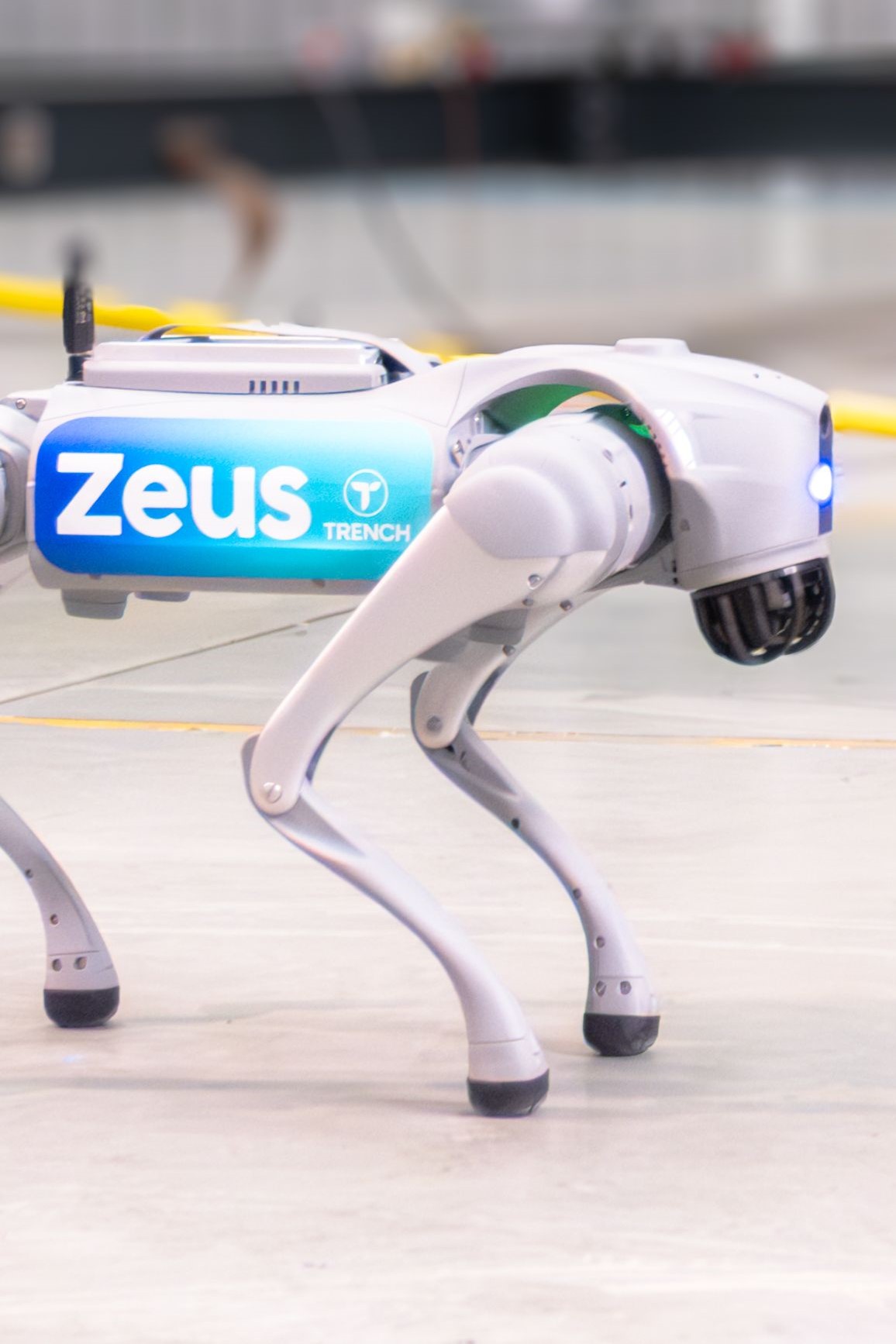
A four-legged agent about the size of a dog rounds the corner at Trench Canada’s high-voltage testing laboratory in Pickering. Moving steadily and deliberately, it scans its surroundings with advanced sensors. Yet, while it resembles a dog, this agent is a highly specialized industrial tool.
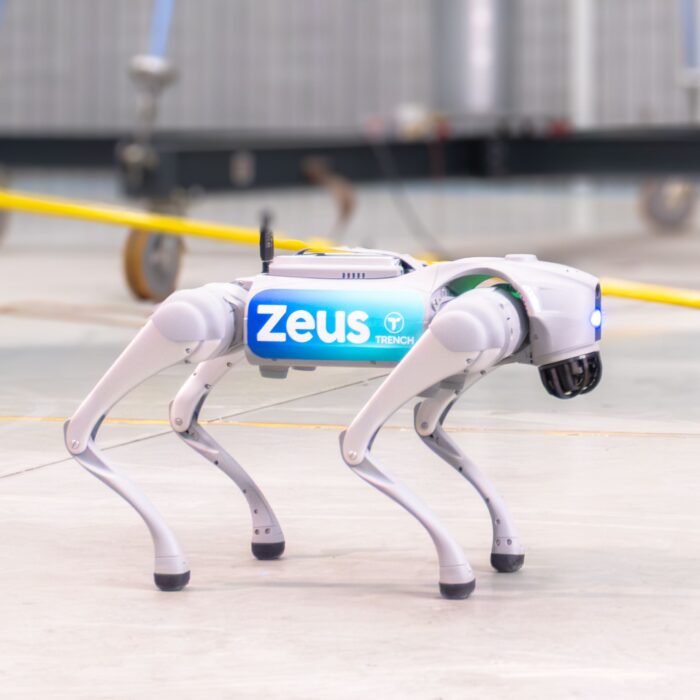
Working 24 hours a day, seven days a week, “Zeus” is one of four AI-powered robotic agents Trench Group has piloted across its global factories since March 2026. Each one of them has its own specialized task and contributes to the same overarching goal: rapidly scaling global manufacturing capacity, while maintaining uncompromising safety and quality standards.
Four Technological Waves Reshaping Manufacturing
Industrial robots arrived on factory floors back in the 1970s, taking over repetitive tasks in controlled environments − the automotive industry became its symbol, still among the top recipients of new industrial robot installations today. The next phase brought digital technologies into production. Processes became smarter, more connected, but people remained at the center.
Now AI is moving faster still. The International Monetary Fund estimates that around 40 percent of jobs globally are exposed to AI − in advanced economies, that figure rises to 60 percent. And now, a fourth wave is arriving: AI-based robotic agents − learning, adapting, and operating in complex environments alongside people.
As Trench Scales, Robots Champion Safety and Quality
Project OLYMPUS is Trench’s answer to the new exponential technologies. Named after the peak of ambition and excellence in Greek mythology, it is Trench Group’s initiative to deploy AI-based robotics across its global operations, always alongside the people already doing the work. The principle is clear: AI adds capability, it does not cut headcount.
With over 3,000 employees globally and more than 1,000 to join by 2030, the challenge is making sure every new hire, every new factory, and every new product still meets the same standard the last one did. That’s the job Zeus, Argus, Mentor, and Hermes were built for. Beyond capacity, the agents can also take on tasks that carry physical strain − heavy lifting, repetitive movements, work in high-voltage environments. A potential step toward a safer, more ergonomic workplace.
New Approach to Quality
From Trench Canada to Italy: here, it is not a dog, but a shining, humanoid robotic agent moving slowly through the Trench factory in Cairo Montenotte. He does not miss a detail when inspecting the instrument transformers the company builds here. Named after the all-seeing giant of Greek mythology − the creature with a hundred eyes – Argus serves as Trench’s new quality agent.
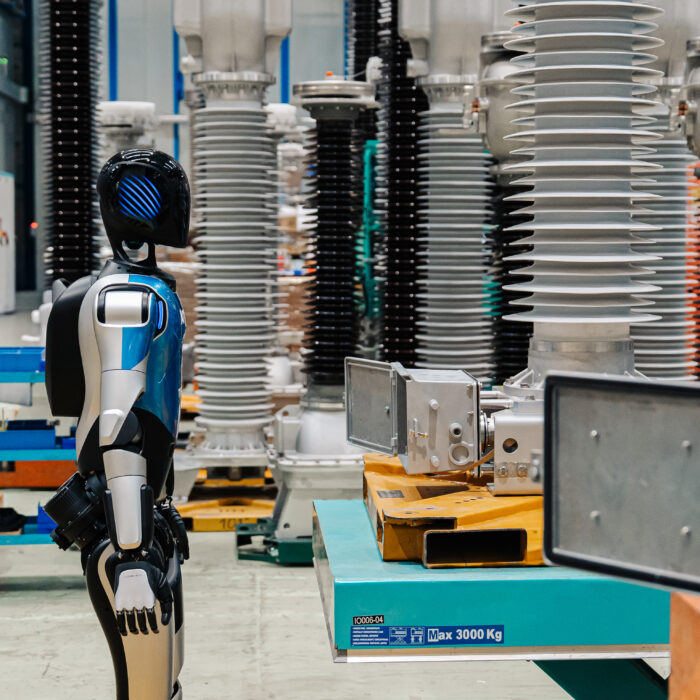
He captures images, reads serial numbers, and compares every component against the quality standards in real time. When he detects a discrepancy, Argus flags it immediately. But what Argus cannot do, and is not designed to do, is to take final decisions. That remains with the employees, always relying on human expertise and judgement.
Robotics that Enhance Human Expertise
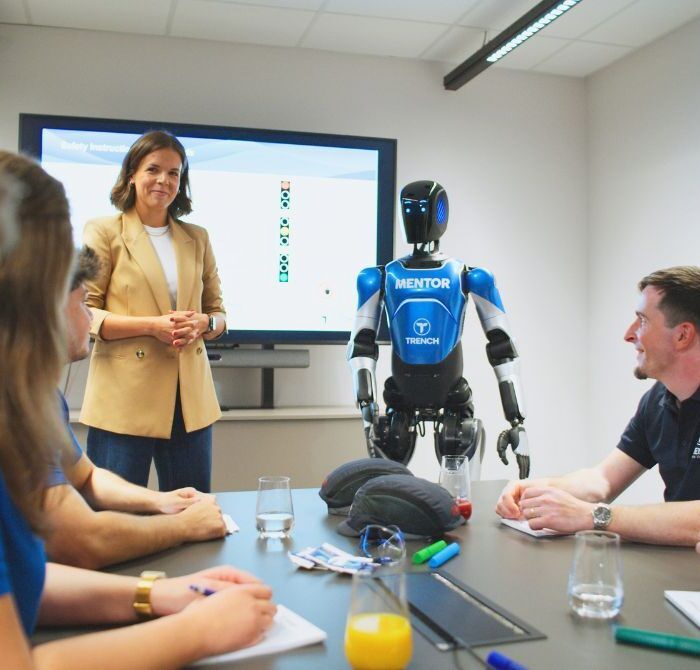
More than 600 kilometers to the north, at Trench’s Austrian Leonding site, trainer Anna Maria Brudniak explains what her new colleague Mentor does: “He is handling the standards when onboarding our new employees. That frees me for what really needs human expertise and intuition.”
Mentor delivers standardized safety training and onboarding content, ensuring every new hire gets the same quality of onboarding, wherever they join − and crucially, in every language needed. And this will keep him quite busy: Trench is expanding production capacity in Leonding, with the workforce growing by 25 percent until 2028.
Where Supply Chain Quality Begins
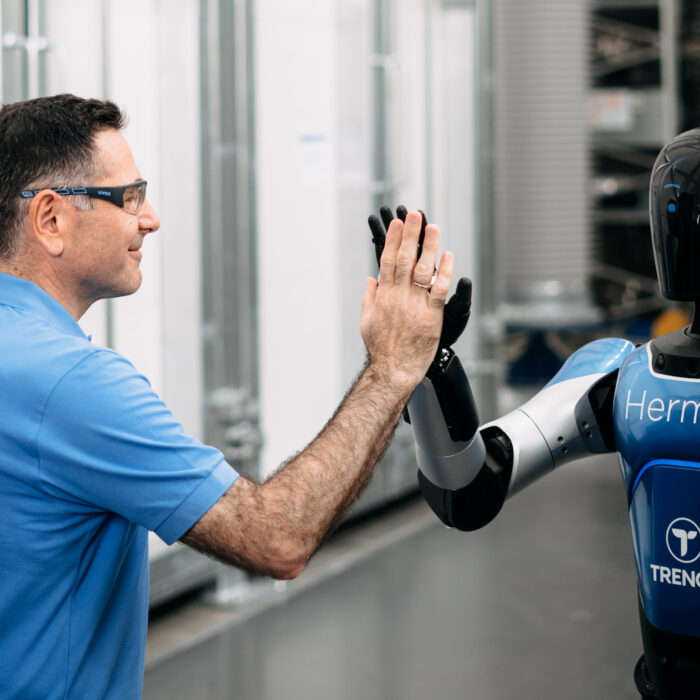
The fourth stop is the Trench factory in Bamberg, Germany. A humanoid robot named Hermes checks the components and materials arriving from suppliers before they enter production. He guides a scanner slowly and methodically across each part’s surface, mapping every dimension against the original specification, down to the micrometer.
On the screen next to him, surface after surface turns green. Only then does the part move on into production. Here it becomes part of an instrument transformer, helping grid operators around the world understand, protect, and manage their networks.
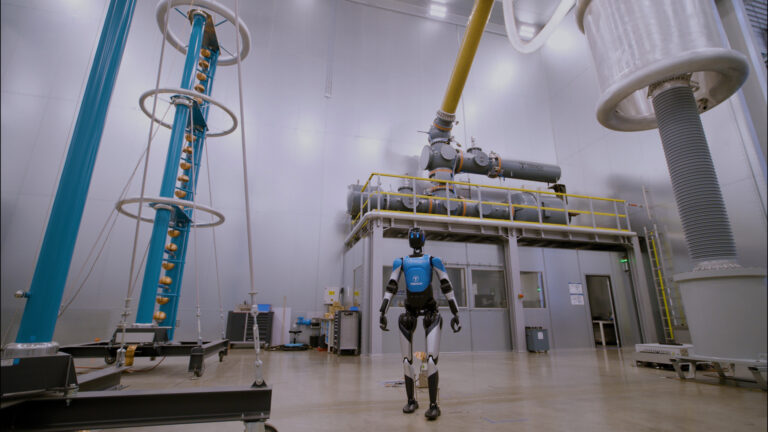
Zeus patrols for safety. Argus inspects for quality. Mentor trains new colleagues. Hermes checks what comes in before it ever reaches the line. Four links in the same chain, from the factory floor to the grid.
Step by Step, Factory by Factory
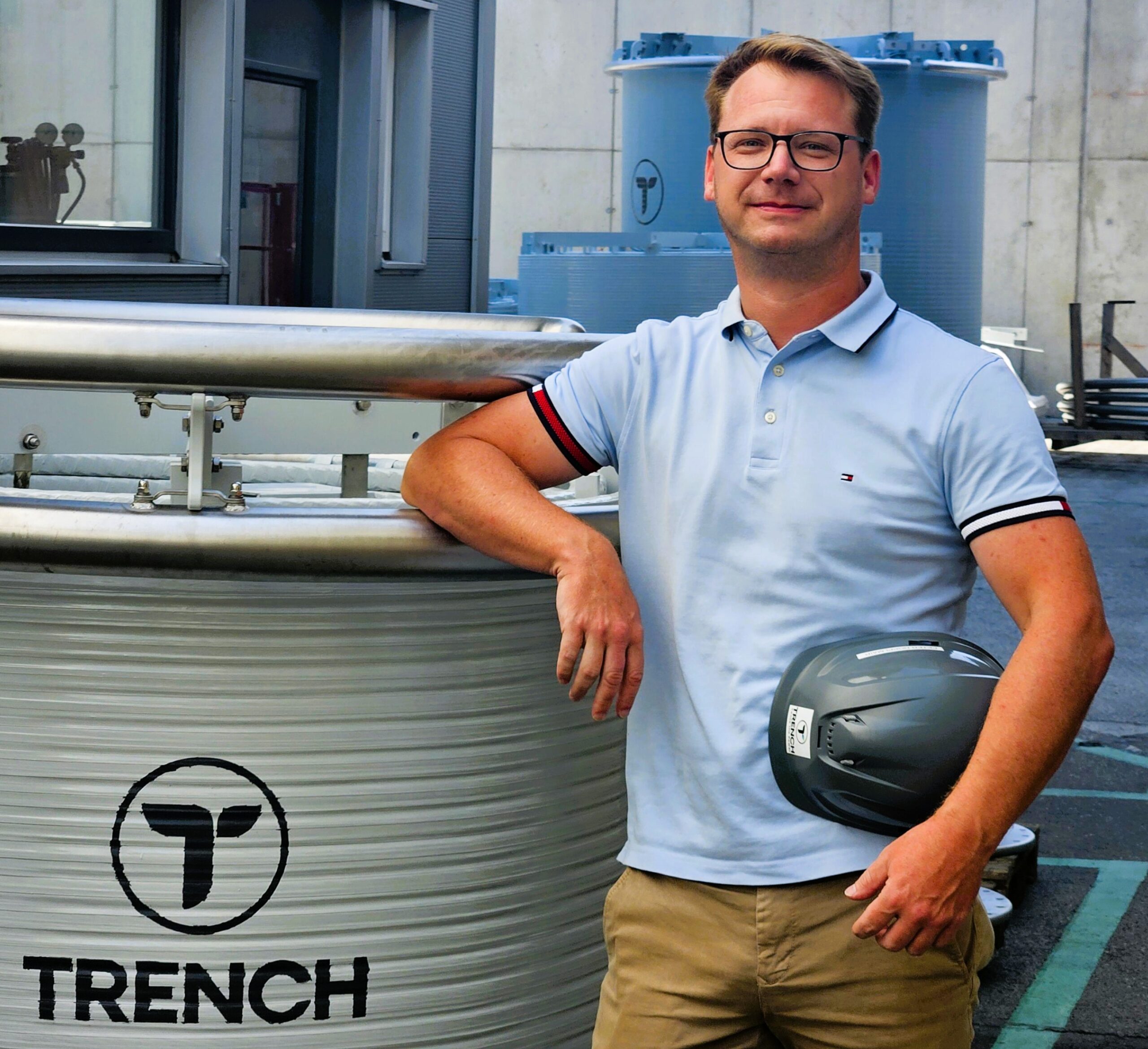
Four agents. Four factories. One strategy. As Dr. Bahadir Basdere, President & CEO of Trench Group, puts it: “When we launched Zeus in Canada, we started with a question: Could robotic agents become a real part of how Trench works? Four factories later, we have our answer. Trench Group is growing fast, and that growth has to be built on what matters most: the safety of our people, and the quality of our products and processes. Robotics takes on the repetitive, freeing our people to focus on what creates real value”.
All Project OLYMPUS use cases are developed together with local teams, including training and feedback rounds, to ensure employees actively shape how AI and robotics support their daily work. Bahadir looks ahead: “What’s next: more use cases, more agents − in every Trench factory worldwide. Step by step, always together with the people on the ground”.
Industrial AI is one part of how Trench is building the factory − and the company – of tomorrow. Enterprise AI and AI Governance, the other two pillars of Trench’s AI strategy, are stories for another day.